Feb 22, 2005

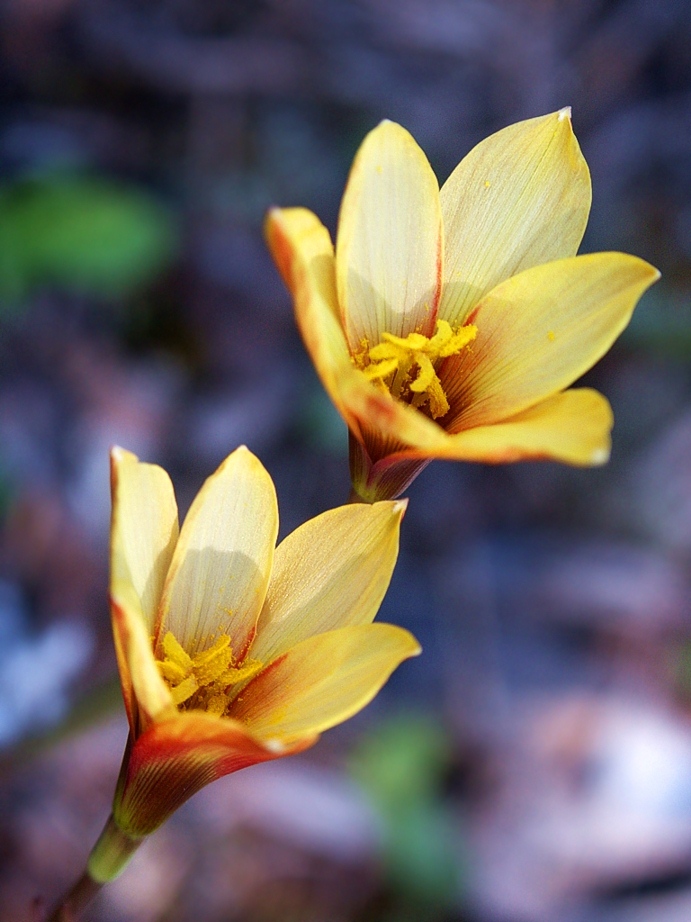
A member of Uruguay's savannah ecoregion / Un miembro de la ecoregión pradera de Uruguay (Habranthus tubispathus)


The unique grasslands, palm savannas and gallery forests of this ecoregion cover a vast area of southern South America including the entire country of Uruguay.
The savannas are critically endangered due to the fact that there are few small isolated patches of intact habitat remaining. The whole ecoregion has been severely altered by cattle ranching- one of the main pillars of the national economy in Uruguay. About 80% of Uruguayan territory is used for cattle ranching on natural and artificial savannas. Over-grazing with unequal distribution of cattle in some areas has degraded the natural vegetation in the savannas. Artificial grasslands increased by 32% between 1980 and 1990, threatening our country's biodiversity.
Las singulares praderas, savanas de palmeras y montes galerías de esta ecoregión cubren una vasta área al sur de Sudamérica incluyendo la totalidad del campo uruguayo.
Las savanas están criticamente amenazadas debido a que sólo persisten pequeñas áreas de hábitat intacto. Casi el 80% del territorio uruguayo se utiliza para la explotación ganadera y se ha optado por la introducción de praderas artificiales en reemplazo de las nativas. El pastoreo abusivo, con una distribución inapropiada del ganado en algunas áreas ha degradado dicha vegetación natural mientras que las praderas artificiales han aumentado un 32% entre 1980 y 1990, aumentando aún más la biodiversidad de nuestro país.
(Arboretum Lussich - Maldonado)

Posted by Hello

Feb 20, 2005

Blue Native flower / Flor azul nativa (Commelina difusa)


Prairie grasses and herbaceous plants dominate our landscape and represent the nation's major source of natural wealth. Covering more than 90 percent of the country, the grass-dominated scenery is broken only by sparse indigenous forests, scrub woodlands that cover rocky hills and ridges, and artificially planted eucalyptus and pine lots.

Pastos de pradera y plantas herbáceas dominan nuestro territorio y representan la mayor fuente de riqueza natural. Cubriendo más del 90 porciento del país, el paisaje dominado por pasturas sólo es interrumpido por escasos montes indígenas, arbustos que cubren las colinas rocosas y bosques artificiales de eucaliptus y pinos.
(Arboretum Lussich - Maldonado)
Posted by Hello

Sandhill flower / Flor en duna


Uruguay's psamophilic or sand dune vegetation is distributed along the estuary and marine shores and in certain interior zones of the country.Given its location and fragility the dune ecosystem has probably been the most modified by human activity, bringing about a negative impact on its wild dwellers.

En Uruguay la vegetación psamofílica o de dunas está distribuída a lo largo de las costas del estuario y marinas y hasta en ciertas zonas del interior del país. Dada su localización y fragilidad, el ecosistema de dunas ha sido posiblemente el más modificado por la actividad humana y ello ha causado un impacto negativo en sus moradores salvajes.
(Playa Pascual - San José)

Posted by Hello