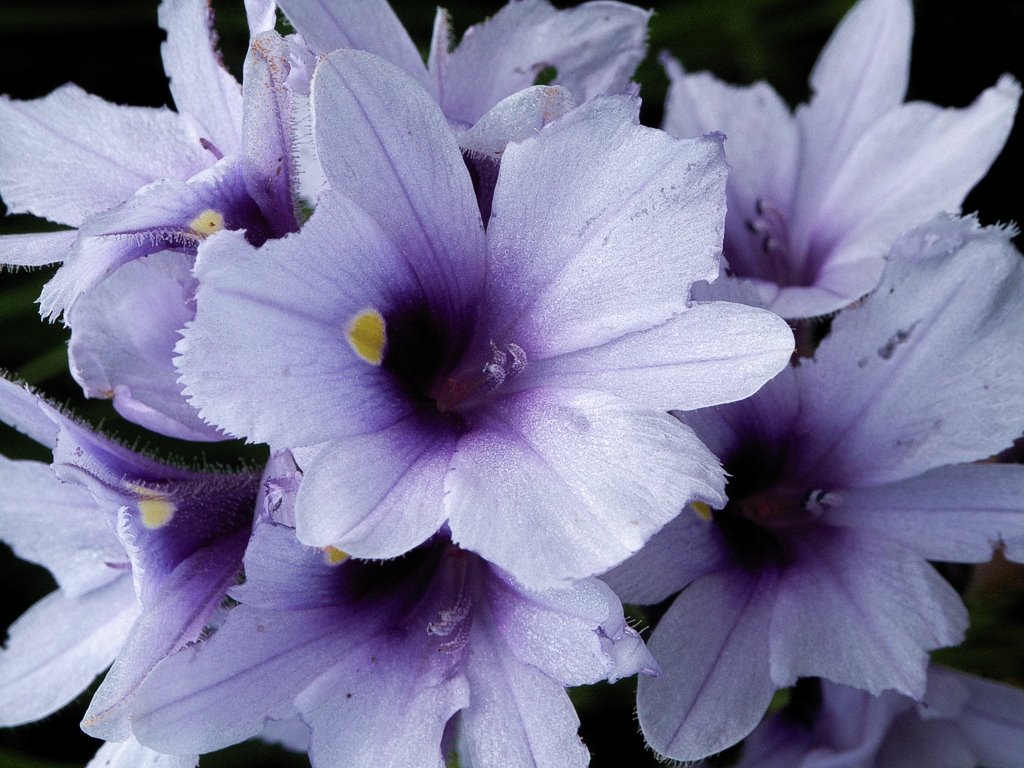
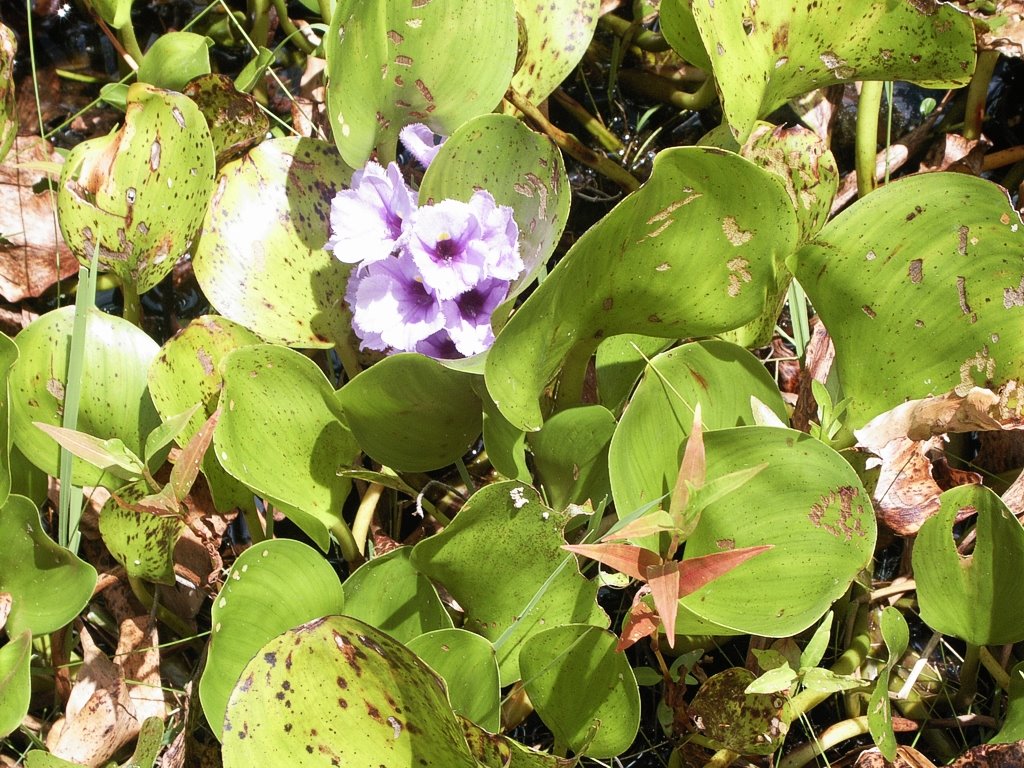
Pontederia is a genus of aquatic plants, commonly called pickerel weeds. Pontederia is endemic to the Americas, distributed from Canada to Uruguay, where it is found in shallow water or on mud. The genus was named by Linnaeus in honor of the Italian botanist Giulio Pontedera. These plants have large waxy leaves, succulent stems and a thick pad of fibrous roots. The roots give rise to rhizomes that allow rapid colonization by vegetative reproduction. Species are perennial, and produce a large spike of flowers in the summer. There is a species of bee (Dufourea novae-angliae) that exclusively visits the species shown here, Pontederia cordata.
Pontederia es un género de plantas acuáticas, comunmente llamadas celestinas. Son endémicas de las Américas, distribuídas desde Canadá hasta Uruguay, donde se las encuentra en agua llana o en el barro. El género fue designado por Líneo en honor al botánico italiano Giulio Pontedera. Estas plantas tienen hojas serosas grandes, tallos suculentos y un amasijo de raíces fibrosas. Las raíces dan lugar a rizomas que permiten una rápida colonización mediante reproducción vegetativa. Las especies son perennes y producen una notoria espiga de flores durante el verano. Existe una especie de abeja (Dufourea novae-angliae) que visita exclusivamente la especie que se muestra aquí, Pontederia cordata.
Pontederia es un género de plantas acuáticas, comunmente llamadas celestinas. Son endémicas de las Américas, distribuídas desde Canadá hasta Uruguay, donde se las encuentra en agua llana o en el barro. El género fue designado por Líneo en honor al botánico italiano Giulio Pontedera. Estas plantas tienen hojas serosas grandes, tallos suculentos y un amasijo de raíces fibrosas. Las raíces dan lugar a rizomas que permiten una rápida colonización mediante reproducción vegetativa. Las especies son perennes y producen una notoria espiga de flores durante el verano. Existe una especie de abeja (Dufourea novae-angliae) que visita exclusivamente la especie que se muestra aquí, Pontederia cordata.