Showing posts with label Fauna - fish/peces. Show all posts

Feb 25, 2008

Red porgy / Pargo rosado (Pargus pargus)

Pargus, a sea fish, is in the family Sparidae, a member of the Perciforms that can be found throughout the Atlantic ocean and the Mediterranean. Its overall body color is red-orange with tints of silver. There are 11 to 12 rows of small blue spots occurring from the nape region to the caudal peduncle and extending ventrally to just below the base of the pectoral fin. Ventrally, the fish are white to grey-white. This species is a protogynous hermaphrodite sparid of increasing interest to the aquaculture industry. The first efforts for the intensive culture of the red porgy started in Europe in 1989, when broodstock and fry were caught from the wild and acclimated on land installations.
El Pargo, un pez de agua salada, pertenece a la familia Sparidae, miembro de los Perciformes que puede encontrarse por todo el Océano Atlántico y el Mar Mediterráneo. Su color corporal es rojizo con tintes plateados. Hay en él 11 a 12 hileras de manchas azules pequeñas que surgen desde la cabeza hasta el pedúnculo caudal y extendiéndose debajo de la base de la aleta pectoral. Ventralmente estos peces son blancos o blanquecinos. Esta especie es hermafrodita protógena y ha despertado el interés de la industria de la acuacultura. Los primeros esfuerzos del cultivo intensivo del pargo comenzaron en Europa en 1989 cuando algunos especímenes reproductivos y sus crías fueron atrapados en estado salvaje y aclimatados a instalaciones terrestres.

Feb 5, 2008

Grouper / Mero (Acanthistius brasiliensis)

Groupers are protogynous hermaphrodites commonly seen on the east side of the River Plate estuary and the Atlantic Ocean. They change sex from females to a few dominant males. They are bottom-dwelling predators and highly commercial food fish.
Los meros son peces protogeneos hermafroditas comúnmente vistos en el lado oriental del Río de la Plata y el océano Atlántico. Cambian de sexo, usualmente de hembras a machos poco dominantes. Son predadores habitantes de los fondos marinos y se los considera peces de gran valor comercial.

Oct 15, 2006

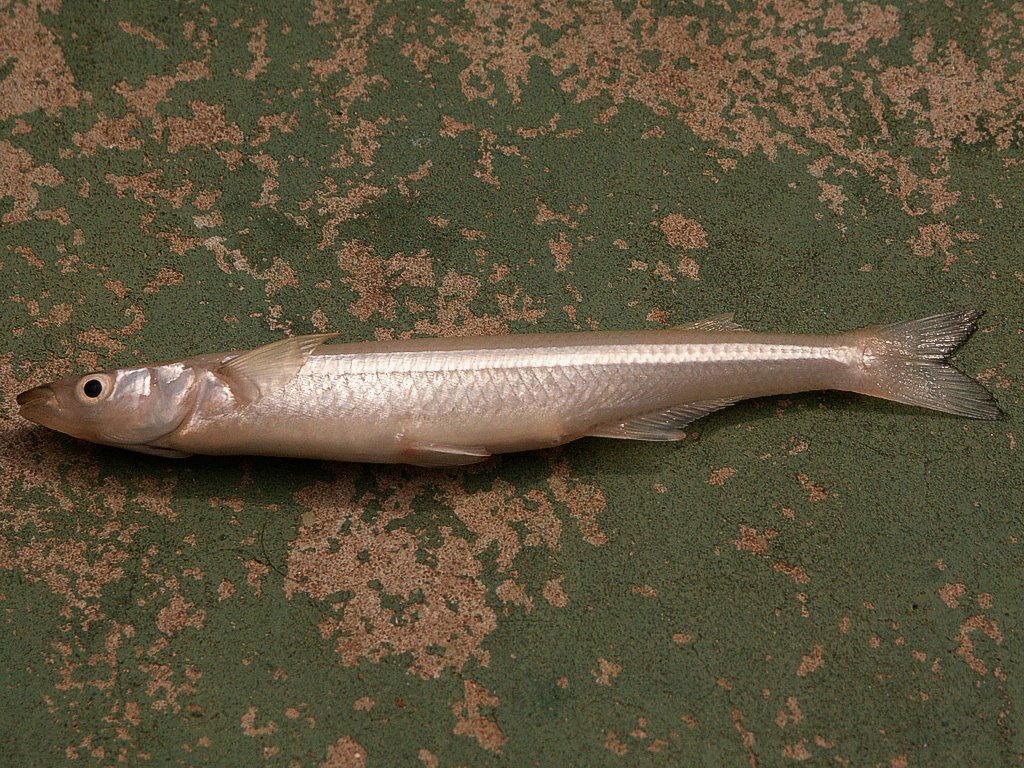
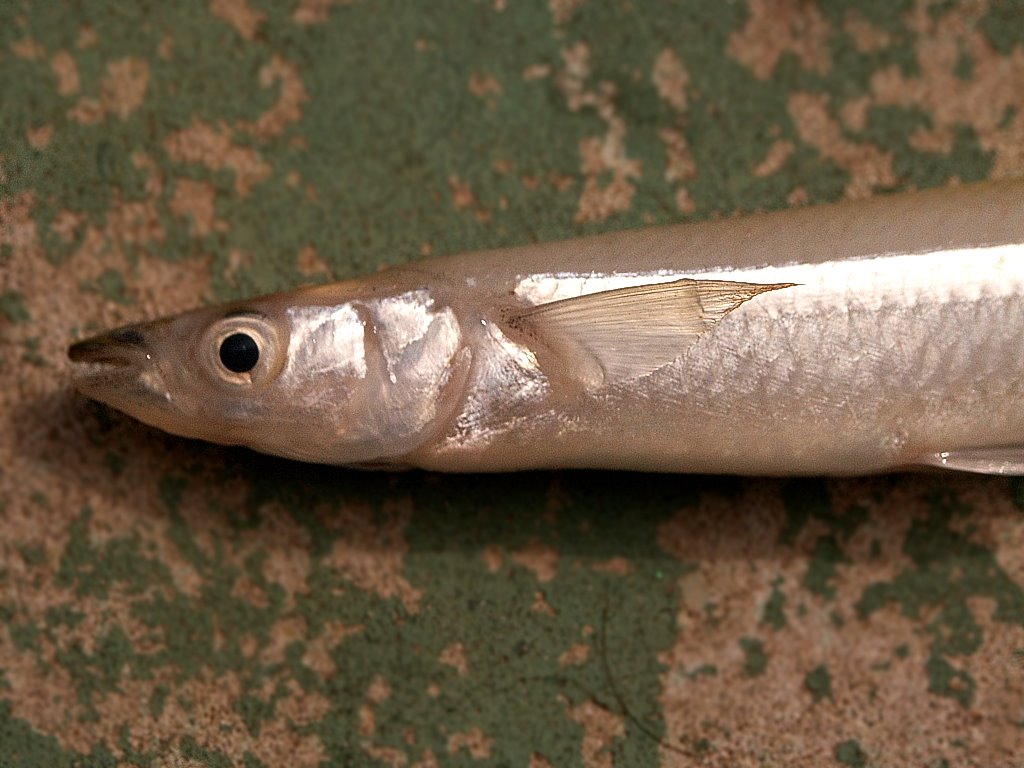
Fresh water Silver fish / Pejerrey de agua dulce (Odontesthes bonariensis)


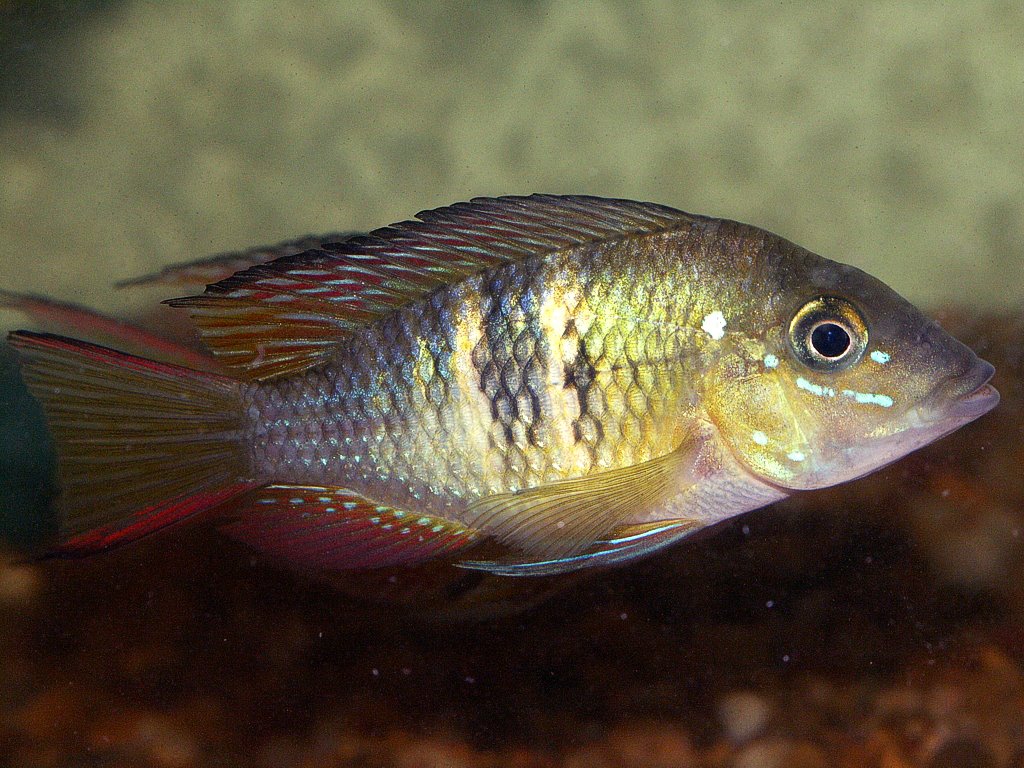
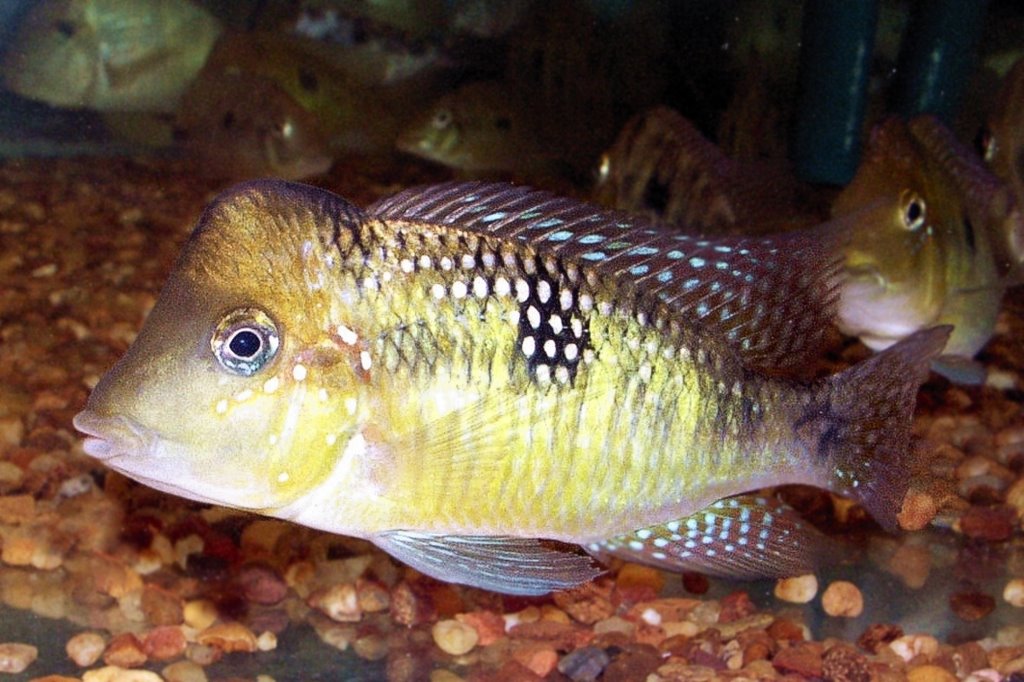
Uruguayan eartheater / Castañeta (Gymnogeophagus rhabdotus)


Gymnogeophagus rhabdotus is a cichlid native to the costal rivers of Uruguay and Southern Brazil. Males achieve a size of 11 cm and are olive-brown with red and blue dots which form stripes in the tail section. In the center of the body is a black blotch over a pale yellow area. The dorsal fin has a lot of sparkling blue and red colors. Red lines mark the lower and upper edge of the caudal fin. Females achieve a size of 8 cm and are colored the same as males but not as bright. When spawning, the color of both fish intensifies. Their bellies turn black and the yellow area around the central black blotch starts to "phosphoresce". The pair clean a round river rock together and dig few pits nearby. The female lays around 200 eggs on the stone and then the male fertilizes them. Then, the female cares for the eggs by fanning them all the time while the male defends spawning territory against intruders.
Gymnogeophagus rhabdotus es un cíclido nativo de los ríos costeros de Uruguay y el sur de Brasil. Los machos alcanzan un tamaño de 11 cm y son pardo-oliváceos con manchas rojas y azules que forman bandas en la sección caudal. En el centro del cuerpo poseen una mancha negra sobre un área amarillenta pálida. La cola dorsal está repleta de tonos azulados y rojizos iridiscentes. Líneas rojas marcan el borde superior e inferior de la cola. Las hembras poseen un tamaño de alrededor de 8 cm y su coloración es idéntica que la de los machos, pero no tan brillante. Durante el desove, ambos sexos exhiben una intensificación de sus colores. Sus vientres se vuelven negro y la zona amarillenta alrededor de la mancha oscura se torna "fosforescente". La pareja limpia una roca redondeada y efectúa algunos pozos entorno a ella. Eventualmente la hembra desova 200 huevos sobre ésta y el macho los fertiliza. Es entonces cuando ella se encarga de cuidarlos enviándoles una continua corriente con sus aletas caudales mientras el macho monta guardia en el territorio evitando el acercamiento de intrusos.

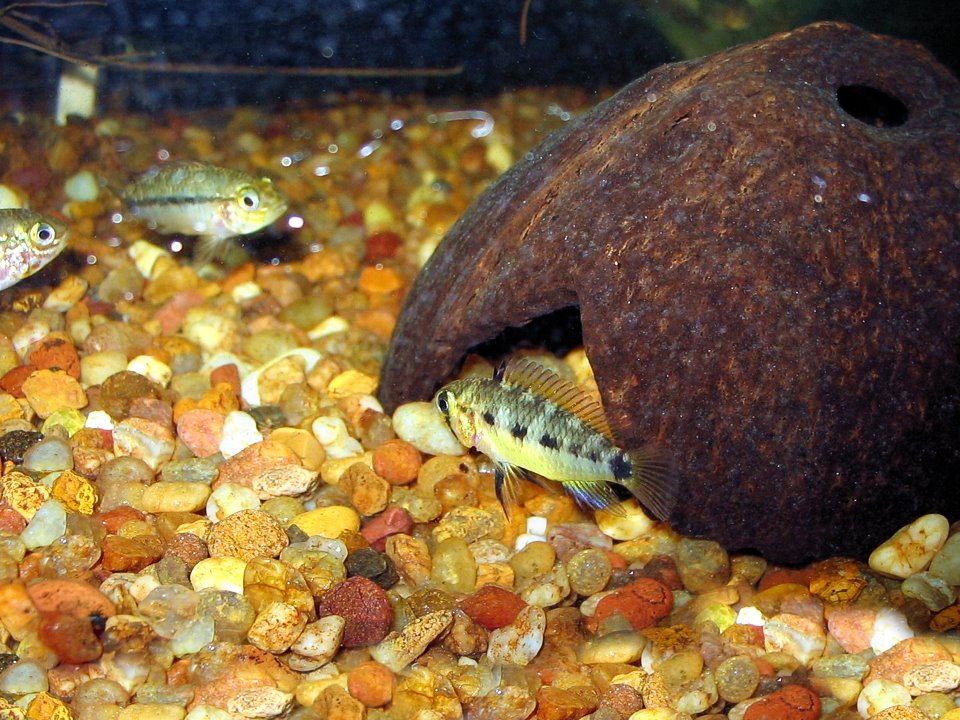
Apistogramma borellii


The Apistogramma borelli is a member of the Apistogramma or dwarf cichlid family. Its natural habitat is in the rivers of Uruguay and Argentina. As with many members of the family the pair retreats to their territory when spawning season begins and the eggs are deposited in a small cave. The female looks after the eggs, but both parents guard and defend their offspring. Like most parents, they have little patience to potential danger to their hatchlings.
El Apistogramma borelli es un miembro de los Apistogramas o enanos en la familia de los cíclidos. Su hábitat natural lo constituyen los ríos de Uruguay y Argentina. Como en muchos miembros de la familia, la familia se retira a su territorio cuando la época del desove comienza y los huevos son depositados en una pequeña oquedad. La hembra cuida los huevos pero son ambos padres quienes montan guardia para defender a los alevines. Y como muchos padres, carecen de paciencia ante la potencial amenaza de los mismos.

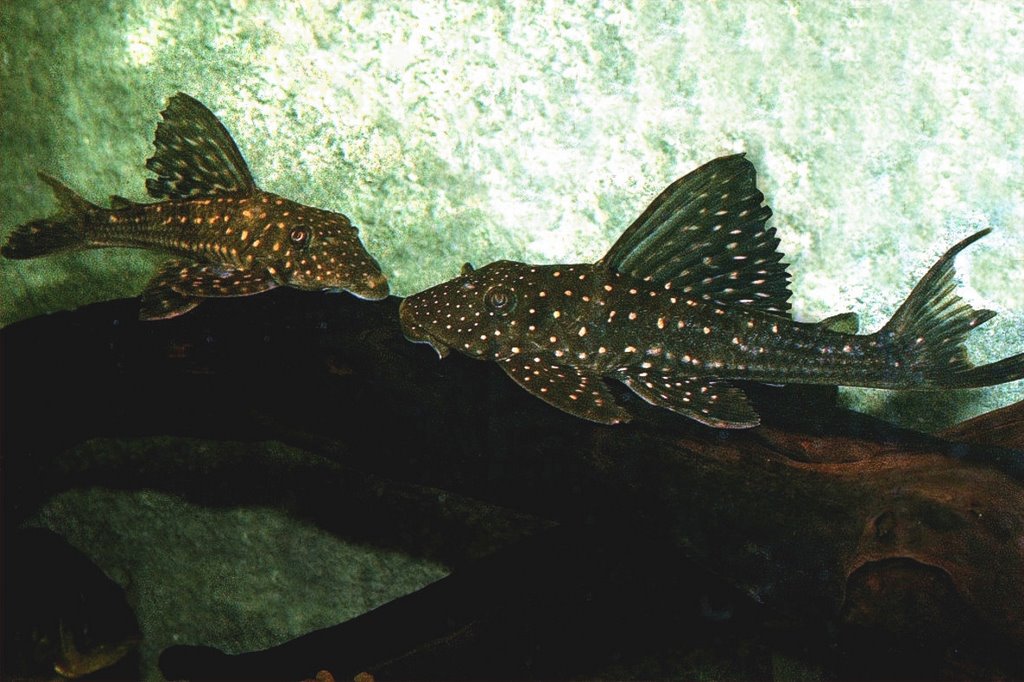
Sucker catfish / Viejas del agua (Loricaridae sp.)


Spike / Cabeza amarga (Chrenicichla punctata)


This specimen was immediately released after the shot was taken.
Este espécimen fue inmediatamente liberado después que se le tomó la foto.

Oct 11, 2006

Gymnogeophagus gymnogenys


Geophagus gymnogenys reaches a maximum length of about 8 cm, with females considerably smaller. The males show rows of small pearly spots on the scale centers.There is a large, black, mid-lateral splotch, a series of five to six vertical, double, dark cross-bands on the flanks and a black "saddle" mark just behind the nuchal knot. Females, on the other hand, are very elongate and have a convex head profile. Historically, Gg. gymnogenys was one of the first of the eartheaters to have been imported (along with the chanchito, Cichlasoma facetum) and was bred around the turn of the 20th century. Sterba (1966) cites 1900 as the initial importation date of this fish into Germany, and line drawings, some in color, appear in the early literature.
El Geophagus gymnogenys alcanza una máxima longitud de alrededor de 8 cm, con hembras considerablemente más diminutas. Los machos presentan hileras de pequeñas manchas perladas en el centro de las escamas, una mancha lateral negra grande y una serie de cinco a seis bandas dobles cruzadas en los flancos. Poseen además una marca a manera de "montura" detrás de la parte posterior de la cabeza. Las hembras, por otro lado, son muy elongadas y el perfil de sus cabezas son convexas. Históricamente, el Geophagus gymnogenys fue uno de los primeros cíclidos en haber sido importados (junto con la llamada "chanchita", Cichlasoma facetum) y fue durante el inicio del siglo 20 cuando se consiguió su reproducción en cautiverio. Sterva (1966) cita el año 1900 como la fecha en la cual se produjo la importación hacia Alemania y donde se efectuaron algunos bosquejos en la literatura que describe a esta especie.

Oct 8, 2006

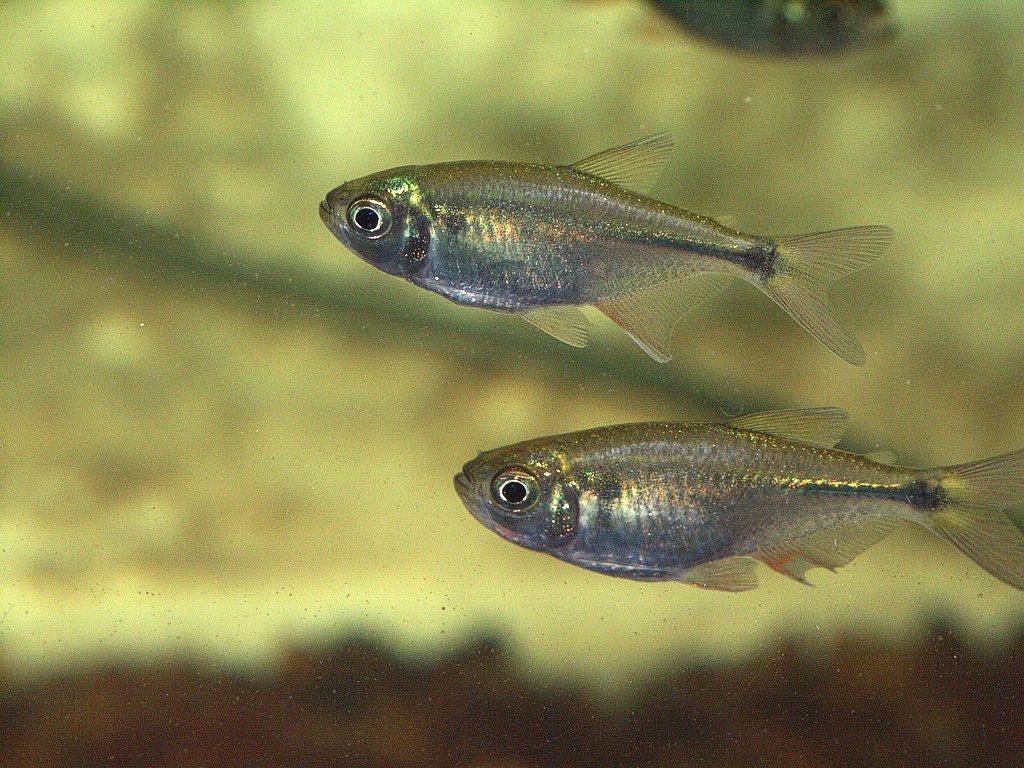
Tetra / Mojarra (Astyanax abramis)


Astyanax is a genus of freshwater fish in the characin family (family Characidae). The roughly 100 Astyanax species are among the fishes known as tetras.
Astyanax es un género de peces de agua dulce de la familia de los carácidos (Characidae). Comprende alrededor de 100 especies de peces conocidos como mojarras o tetras.

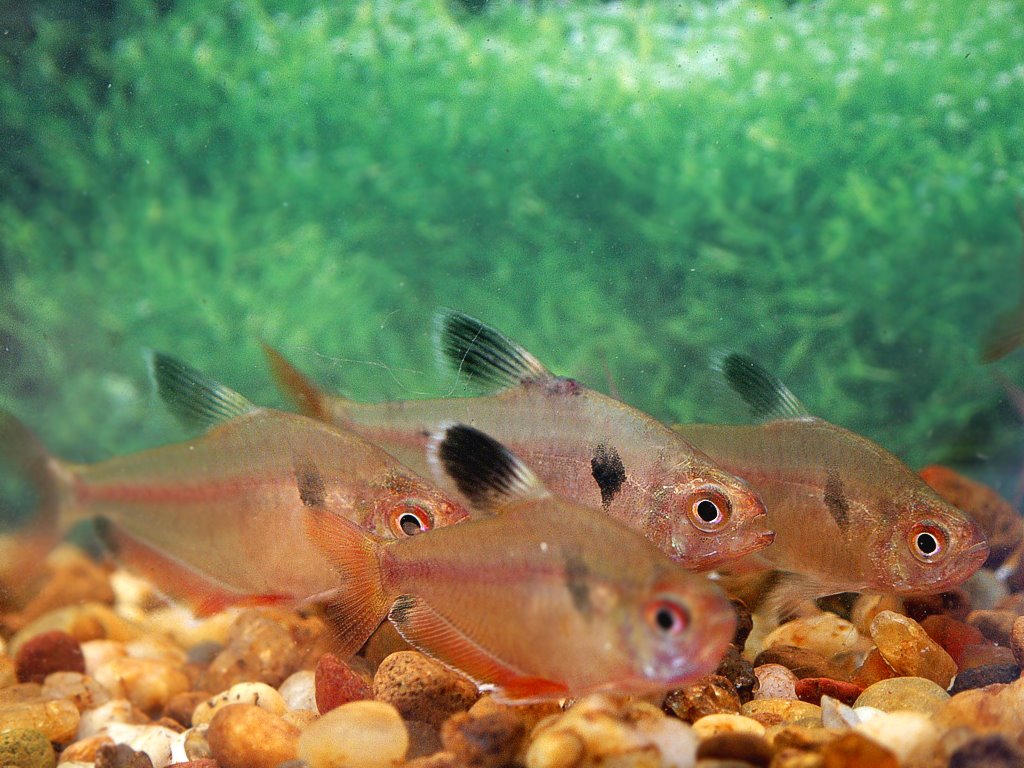
Tetra / Mojarra (Hyphessobrycon erythrostigma)


This fish is prized for the heart shaped spot near where you'd expect the heart to be. Several sub-species exist, including a long finned variety, as well as one that is gold tinted. All of them sport attractive fins edged in white and black, in addition to the characteristic bright red heart in the upper abdomen. They are a relatively peaceful fish suitable for community tanks. Males are slightly larger than females, and have elongated dorsal and anal fins.
Este pez se caracteriza por poseer una mancha en forma de corazón justamente donde se piensa que se halla el mismo. Existen varias subespecies , entre ellas una de cola de velo y otra totalmente dorada. Todas ellas presentan colas bordeadas en blanco y negro en adición con la mancha roja referida anteriormente. Son una especie relativamente pacífica, apta para peceras comunitarias. Los machos son levemente más grandes que las hembras y tienen aletas dorsales y anales más elongadas.

Gymnogeophagus labiatus (male / macho)


G. labiatus inhabits fast flowing water, whose bottom is covered with large rocks and coarse gravel. These fishes are very timid in the wild and lead a relatively reclusive life close to the substrate. The specimen above was caught in the Centurion River, a tributary of the Yaguarón River system in the border between Brasil and Uruguay, some 500 km northeast of Montevideo.
El G. Labiatus habita cursos de agua de corriente relativamente rápida cuyo fondo está cubierto con rocas grandes y grava. Estos peces son muy tímidos en estado salvaje y llevan una vida recluída cerca del substrato. El espécimen de arriba fue atrapado en el arroyo Centurión, un tributario del Río Yaguarón en la frontera entre Brasil y Uruguay, a unos 500 km al noroeste de Montevideo.

Lateral view showing hump / Vista lateral mostrando joroba

Schizodon nasutus


This migratory fish commonly known as "Boga" is endemic of Paraná, Paraguay, and Uruguay River basins.
Este pez migratorio conocido comúnmente como "Boga" es endémico de las cuencas de los ríos Paraná, Paraguay y Uruguay.

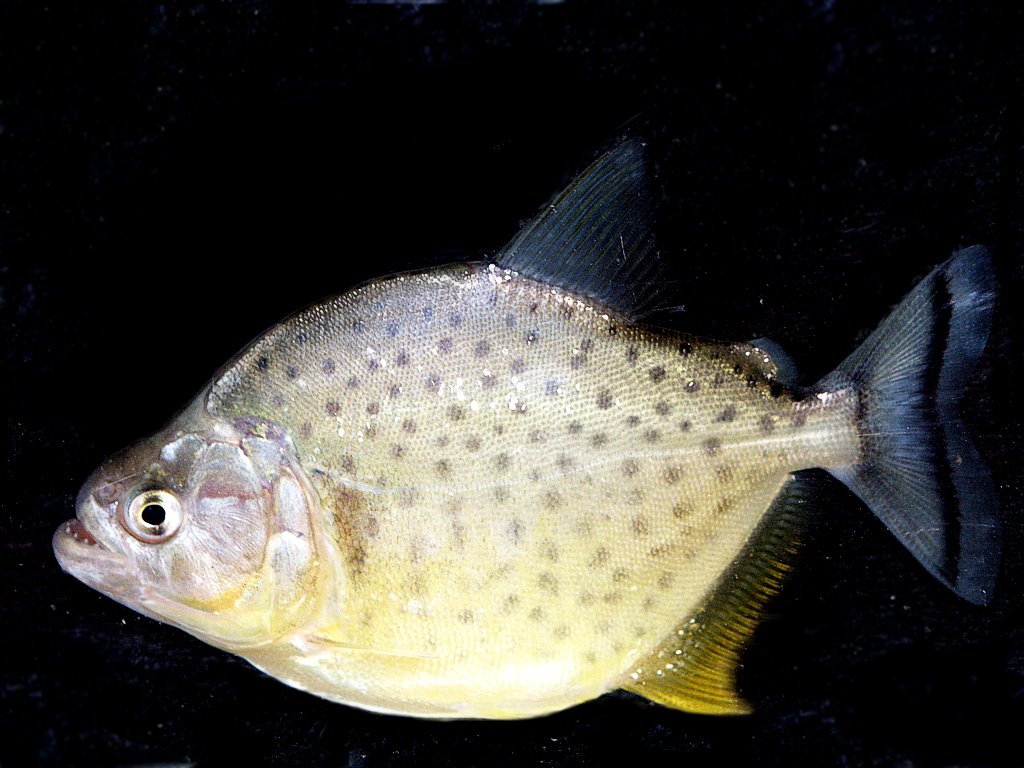
Serrasalmus spilopleura


This species of piranha is frequently seen in Uruguay river. It has a silverish coloration, often with hints of green towards the upper body. They are covered with numberous small dark spots and have a very concave head shape. The older this fish gets, the more convex the shape of the head gets. The usual color is bright gold to yellow in the lower body, changing to a silverish yellow the further you get to the back.
Esta especie de piraña es frecuentemente vista en el Río Uruguay. Posee una coloración plateada, usualmente con tonos verdosos en la parte superior del cuerpo. Están cubiertas de pequeñas manchas y su cabeza es muy cóncava. Cuanto más maduro es el espécimen, más tiende a tomar esta forma. El color usual en el vientre es dorado, cambiando gradualmente al amarillo grisáceo a medida que se avanza al dorso.

Lateral view showing teeth / Vista lateral mostrando dientes

Mar 4, 2005

Crenicichla Lepidota (Pike / Cabeza amarga)


Pike Cichlids are a group of South American fishes of the genus Crenicichla. They inhabit the freshwater streams, rivers and pools of most of the Amazonian rivers, but there are many species all the way down to coastal regions of central Argentina and Uruguay. Crenicichla or Pike cichlids as their name implies, are mostly predatory, consuming small fish for prey. Most of them have an elongated body and a wide, protrusible mouth - features common to many predatory fish.
Pikes are cave-spawners, laying their adhesive eggs somewhere where it would be difficult for you to see. The female is responsible for the care of eggs and the male guards the immediate region against intruders. The eggs hatch in about 3-4 days and the fry are free-swimming in another 3-4 days, depending on the temperature.

Los cabeza amarga son un grupo de peces del género Crenicichla. Habitan los cursos de agua dulce en la mayoría de los tributarios del Amazonas pero también existen especies en las regiones costeras de Argentina y Uruguay. Son peces predadores que consumen otros peces de porte más pequeño. La mayoría de ellos poseen cuerpo alargado y boca saliente, una característica típica de los peces con estos hábitos alimenticios. Desovan usualmente en pequeñas oquedades, lo que hace muy difícil de hallar sus huevos. La hembra es responsable por su cuidado mientras que el macho se encarga de vigilar e intimidar a los intrusos que acerquen demasiado. Las crías nacen entre los 3 y 4 días de la puesta y pueden nadar libremente 3 o 4 días más tarde, dependiendo de la temperatura circundante.

(Río Cuareim - Artigas)


Mar 2, 2005

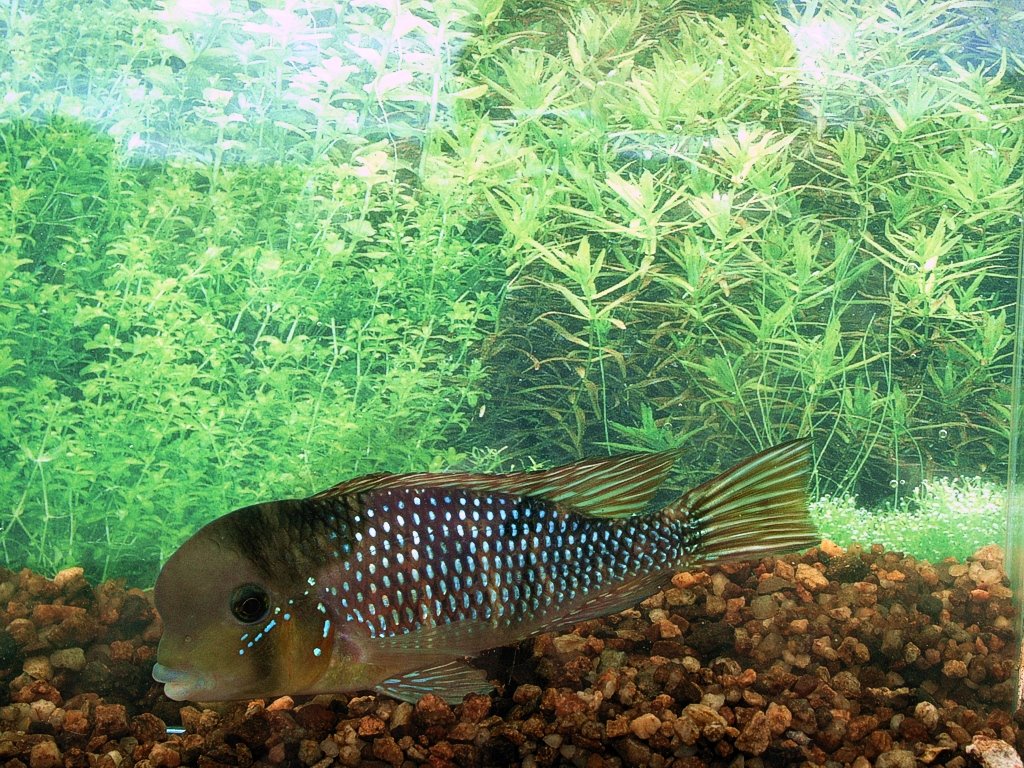
Gymnogeophagus balzanii


The males of this cichlid have a huge clear liquid filled 'hump' on their forehead that starts at the top of the head at the beginning of the dorsal fin and continues down to the upper lip. The shape of this 'hump' gives them a very square and large looking head. They also shimmer with dazzling iridescent colored speckles on their sides ranging from green to blue. These beautiful speckles could also be seen in their ventral and anal fins. The male has a long extension on his dorsal fin as seen in most cichlid species. Both sexes have also the vertical bars. The females are a bit smaller than the males and lack hump.

Los machos de este cíclido poseen una protuberancia llena de líquido en su frente, la cual comienza en la parte superior de la cabeza al comienzo de la aleta dorsal y continúa hasta el labio superior dándoles una forma casi cuadrada. Sus escamas brillan con colores iridescentes que varían del verde al azul. Dichas iridiscencias pueden también verse en la aleta dorsal y anal. Otro aspecto característico de los machos es una larga extensión en ambos extremos de la cola como ocurre en muchos cíclidos. Ambos sexos poseen barras verticales. Las hembras a su vez son más pequeñas y carecen de la joroba.
(Río Uruguay - Salto)