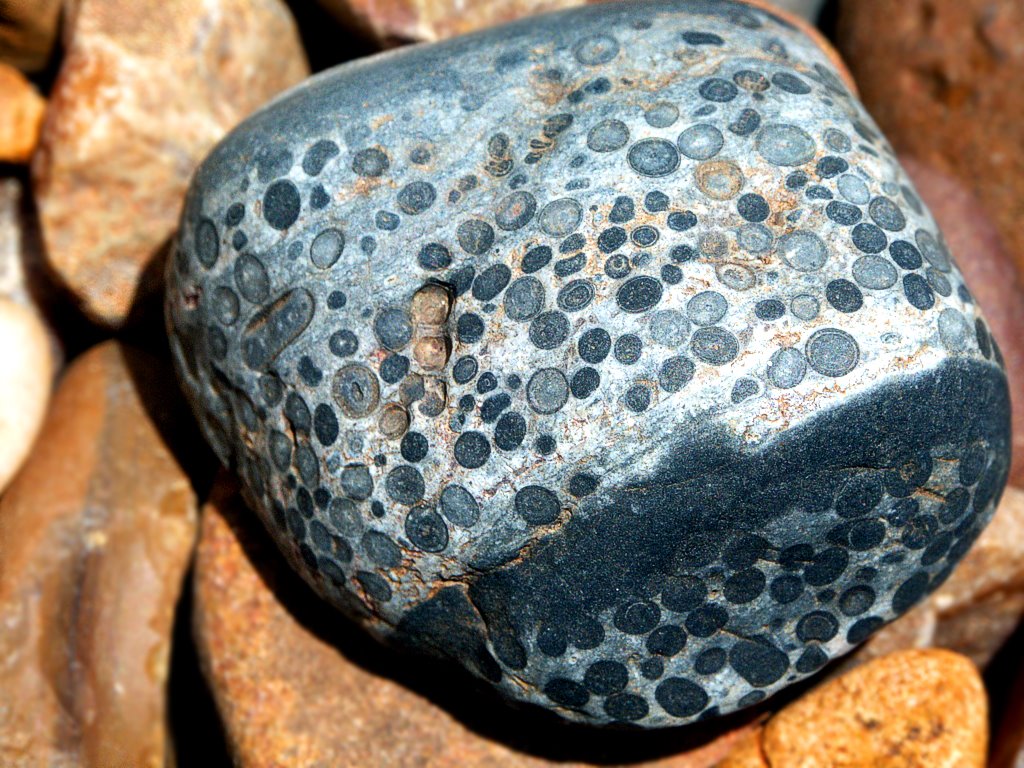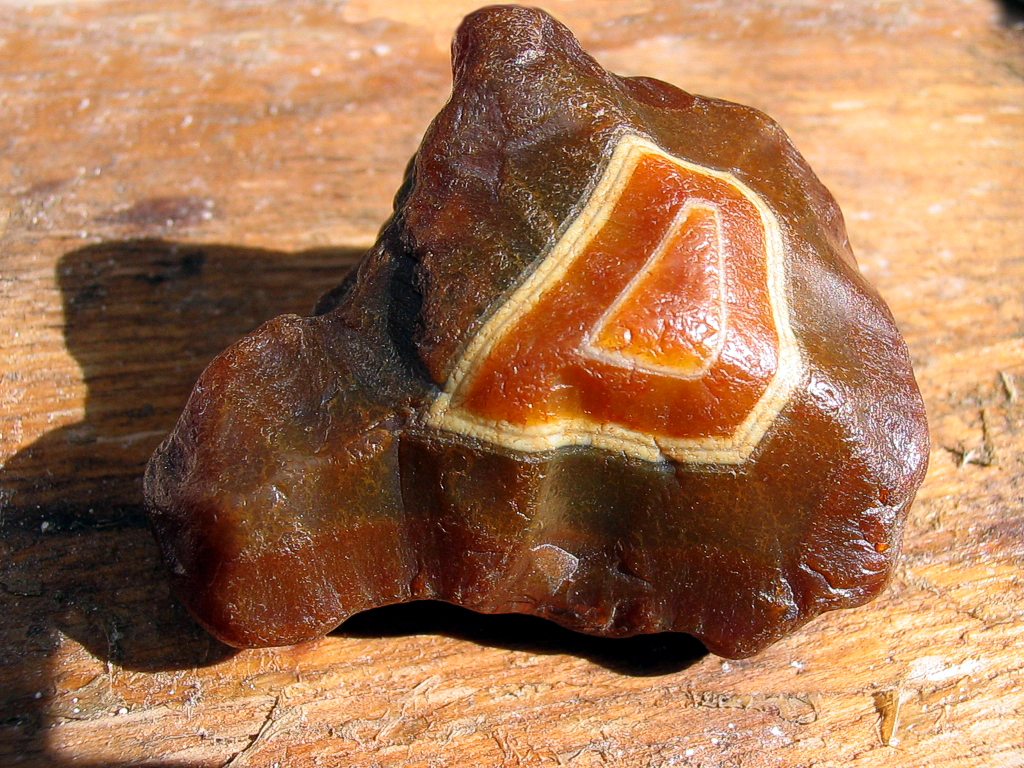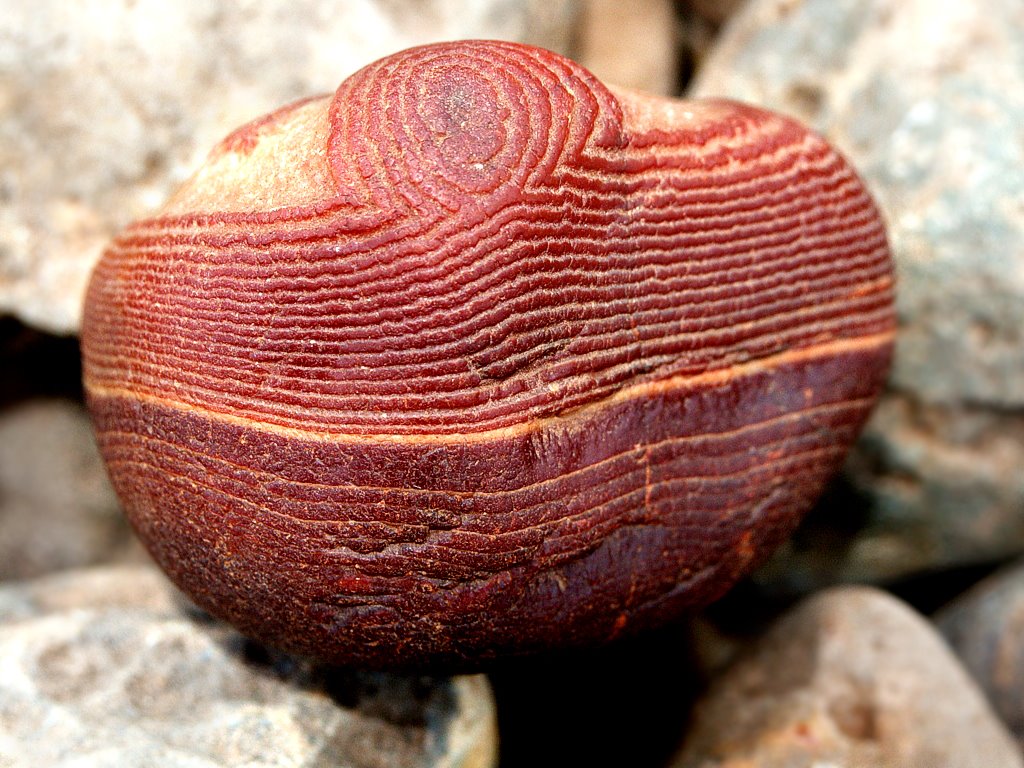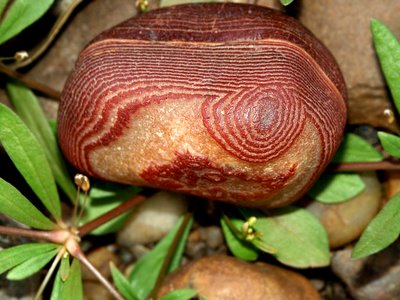
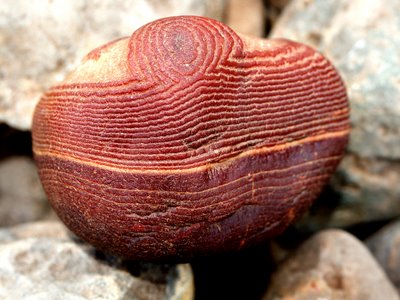
Most agates occur as nodules in volcanic rocks or ancient lavas where they represent cavities originally produced by the disengagement of volatile gases in the molten mass which were then filled, wholly or partially, by siliceous matter deposited in regular layers upon the walls. Several types of agates are currently known, among which the most common are those with bands that seem to have circumscribed the walls of the vesicles in which they formed. Most Uruguayan agates exhibit gravitational banding, that is, straight parallel banding, often called Uruguay banding. Consequently,agates with this banding are termed Uruguay agates.The designation “Uruguay agate” originated from the relatively frequent occurrence of such agates in the Paraná continental flood basalts in Brazil and adjoining parts of Uruguay, Paraguay, and Argentina. Gravitational banding results from the sedimentation of gelatinous silica particles in parallel layers, mostly at or near the bottom of vesicles.
La mayoría de las ágatas aparecen como nódulos en rocas volcánicas o lavas antiguas donde aparecen en cavidades o huecos originalmente producidos por la separación de gases volátiles en la masa derretida. Ésta fue eventualmente rellenada en forma parcial o total por material silíceo que se fue depositando en capas regulares sobre las paredes de la cavidad. Se conocen varios tipos de ágatas, entre las cuales las más comunes son aquellas con bandas que parecen haber circunscripto las paredes de las vesículas en las cuales se originaron. Muchas ágatas de Uruguay exhiben un bandeado gravitatorio; es decir, una serie de líneas paralelas denominadas "bandeado Uruguay". Como consecuencia todas las piedras que siguen este patrón son llamadas "Ágatas Uruguay"; derivado de la ocurrencia frecuente de estas piedras en los derrames basálticos Paraná ubicados en Brasil, áreas adjacentes de Uruguay, Paraguay y Argentina. El bandeado gravitacional resultó de la sedimentación de partículas de sílice gelatinosa en capas paralelas, la mayoría cercano o al fondo de las vesículas.